While you focus on patient care, know that Medmax handles your complicated operational and analytical tasks. Our full range of services lets you take a sigh of relief!
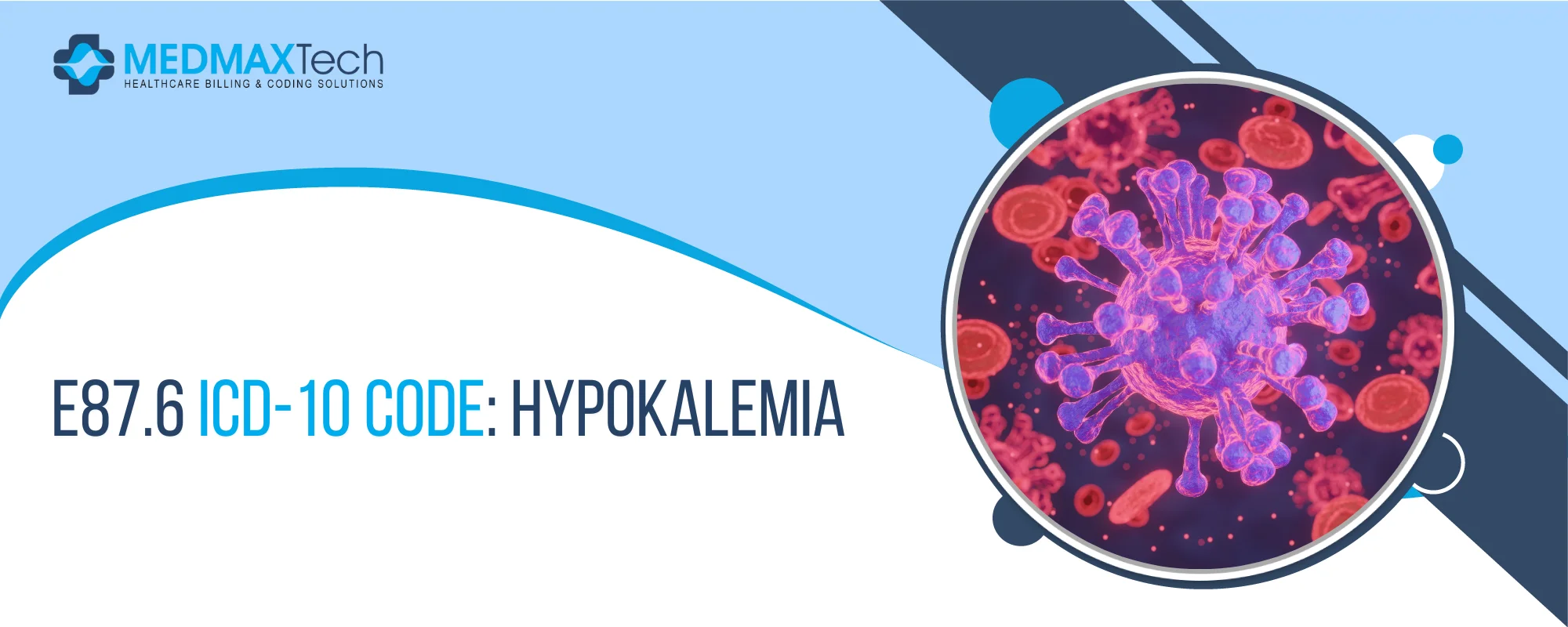
What E87.6 ICD-10 Code Covers: The E87.6 ICD-10 Code is used to identify hypokalemia, a medical condition where potassium levels in the blood are low. Hypokalemia may cause muscle weakness, muscle cramps, and in severe cases, heart-related problems.
Session Duration Requirements: The code itself does not set any specific session or treatment time limits. However, proper documentation should include the patient’s medical history and how long treatment continues to ensure correct billing and continuity of care.
Who Can Use the Code: The E87.6 ICD-10 Code can be used by primary care physicians, specialists such as nephrologists, emergency department staff, and other healthcare providers who diagnose or treat patients with electrolyte imbalances.
Best Practice for Proper Use: Accurate documentation is very important. Providers should clearly record symptoms, laboratory results, and treatment plans. All clinical information must support the diagnosis and correct code assignment.
Example of Actual Usage: A patient arrives with weakness and arrhythmias. Blood tests show potassium levels of 2.9 mEq/L. Based on these findings, the E87.6 code is used for hypokalemia during the patient’s evaluation and treatment.
What is E87.6 ICD-10 Code
The E87.6 ICD-10 Code represents hypokalemia, a condition caused by abnormally low potassium levels in the blood. Potassium is essential for many body functions, including muscle movement and nerve signals. Normal potassium levels usually range from 3.5 to 5.0 mEq/L. When levels fall below this range, patients may develop symptoms that affect their overall health.
Hypokalemia can occur due to several reasons, such as excessive potassium loss through urine or the gastrointestinal tract, poor dietary intake, or the use of certain medications. Early identification of this condition is important because untreated hypokalemia can lead to serious complications, including cardiac arrhythmias and muscle paralysis.
Services Covered Under E87.6 ICD-10 Code
The E87.6 ICD-10 Code covers multiple medical services related to diagnosing and treating hypokalemia. The table below explains the common services that may be billed under this code.
Service
Description
Typical Use
Laboratory Testing
Testing potassium levels in blood samples.
Essential for diagnosing hypokalemia.
Electrocardiogram (ECG)
A test used to monitor heart activity and detect arrhythmias.
Performed when heart-related symptoms are present.
Medication Management
Prescribing potassium supplements or diuretics.
Helps manage hypokalemia and prevent complications.
Patient Education
Educating patients about diet changes and medication use.
Important for long-term control of potassium levels.
Who Can Use the E87.6 ICD-10 Code?
The E87.6 ICD-10 Code can be used by different healthcare professionals involved in diagnosing and managing hypokalemia, including:
Primary Care Physicians: They are often the first providers to see patients with symptoms linked to low potassium levels.
Specialists: Nephrologists and endocrinologists may use this code when treating electrolyte problems related to kidney or hormone conditions.
Emergency Department Staff: Doctors and nurses in emergency settings frequently treat patients with hypokalemia and use this code for accurate care.
Nurse Practitioners and Physician Assistants: These providers can also apply this code when evaluating and treating patients with hypokalemia in different healthcare settings.
How to Use E87.6 ICD-10 Code
Using the E87.6 ICD-10 Code correctly requires careful documentation. Best practices include:
Document Clinical Symptoms: Record symptoms such as muscle weakness or cramping reported by the patient. For example, generalized weakness should be clearly noted.
Include Laboratory Results: Potassium levels must be documented in the patient’s medical record. A potassium level of 2.9 mEq/L supports a diagnosis of hypokalemia.
Record Treatment Plans: Clearly document treatments, such as potassium supplementation. If potassium chloride is prescribed, it should be mentioned in the chart.
Follow Up on Patient Outcomes: Document follow-up visits to monitor treatment results. Improved potassium levels should also be recorded.
Benefits of E87.6 ICD-10 Code
Using the E87.6 ICD-10 Code provides several benefits for both patient care and medical billing.
Benefit
Description
Accurate Diagnosis
Helps correctly identify hypokalemia so patients receive proper treatment.
Improved Patient Outcomes
Ensures timely care, which lowers the risk of serious complications.
Efficient Billing
Correct code usage reduces claim denials and billing delays.
Enhanced Research Data
Accurate coding helps improve data collection related to hypokalemia treatment and prevalence.
Common Mistakes to Avoid with E87.6 ICD-10 Code
Incorrect coding can result in audits or denied claims. Common mistakes include:
Incorrect Documentation: Missing potassium levels or symptoms can lead to claim denials, such as failing to include lab results.
Using Inappropriate Codes: Confusing hypokalemia with other electrolyte disorders, such as hyperkalemia, may cause coding errors.
Omitting Follow-Up Care: Not documenting follow-up visits can affect patient care and billing accuracy.
Neglecting Patient Education Records: Failing to record dietary counseling or education about potassium-rich foods may impact reimbursement.
E87.6 ICD-10 Code vs Other Codes
Comparing hypokalemia with similar codes helps ensure correct coding.
Code
Description
Comparison
E87.6
Hypokalemia
Used for low potassium levels.
E87.7
Hyperkalemia
Used for high potassium levels, which is the opposite condition.
E87.8
Other Specified Electrolyte Disturbances
Used for other types of electrolyte imbalances
Conclusion
The E87.6 ICD-10 Code is an important tool for diagnosing and managing hypokalemia. Understanding how and when to use this code helps healthcare providers deliver accurate treatment and ensure proper billing. Clear documentation of symptoms, lab results, and treatment plans is essential to avoid claim denials. By following best practices and avoiding common mistakes, healthcare professionals can improve patient outcomes while handling medical billing more effectively.
Frequently Asked Questions
What are the potential complications of untreated hypokalemia coded as E87.6?
If hypokalemia coded as E87.6 is not treated, it can cause serious health problems. One major risk is cardiac arrhythmias, which are abnormal heart rhythms and can be life-threatening. Patients may also develop muscle weakness or paralysis, making movement difficult and reducing quality of life.
In severe cases, untreated hypokalemia can lead to respiratory failure because weak muscles may affect breathing, requiring urgent medical care. Long-term or chronic hypokalemia can also damage the kidneys over time and cause additional electrolyte imbalances, leading to further complications.
How does the E87.6 code interact with other ICD-10 codes for related electrolyte imbalances?
The E87.6 code for hypokalemia is often used together with other ICD-10 codes to fully document a patient’s electrolyte condition. For example, if a patient has hypokalemia along with hypernatremia (E87.1), both codes should be reported.
Using multiple ICD-10 codes helps healthcare providers show the complete clinical picture, manage several electrolyte disorders at the same time, and ensure accurate medical billing for all services provided.
In severe cases, untreated hypokalemia can lead to respiratory failure because weak muscles may affect breathing, requiring urgent medical care. Long-term or chronic hypokalemia can also damage the kidneys over time and cause additional electrolyte imbalances, leading to further complications.
What role does diet play in the management of hypokalemia when using the E87.6 code?
Diet plays an important role in treating hypokalemia coded as E87.6. Healthcare providers often advise patients to increase their potassium intake through food to help restore normal levels. Potassium-rich foods such as bananas, oranges, leafy greens, and other fruits and vegetables are commonly recommended.
Patients should also be educated about the safe use of salt substitutes, as some contain potassium and may cause imbalances if used incorrectly. Proper documentation of dietary counseling, patient education, and adherence to dietary recommendations is important and should be included in the patient’s medical record to support effective treatment.
Using multiple ICD-10 codes helps healthcare providers show the complete clinical picture, manage several electrolyte disorders at the same time, and ensure accurate medical billing for all services provided.
In severe cases, untreated hypokalemia can lead to respiratory failure because weak muscles may affect breathing, requiring urgent medical care. Long-term or chronic hypokalemia can also damage the kidneys over time and cause additional electrolyte imbalances, leading to further complications.
Jessica CollinsCertified Professional Coder
Jessica Collins is a Certified Professional Coder (CPC) specializing in medical billing services and revenue cycle management (RCM). She works closely with healthcare providers and medical billing companies to streamline claim processing, reduce denials, and enhance reimbursement efficiency.
Jessica Collins is a Certified Professional Coder (CPC) specializing in medical billing services and revenue cycle management (RCM). She works closely with healthcare providers and medical billing companies to streamline claim processing, reduce denials, and enhance reimbursement efficiency.