





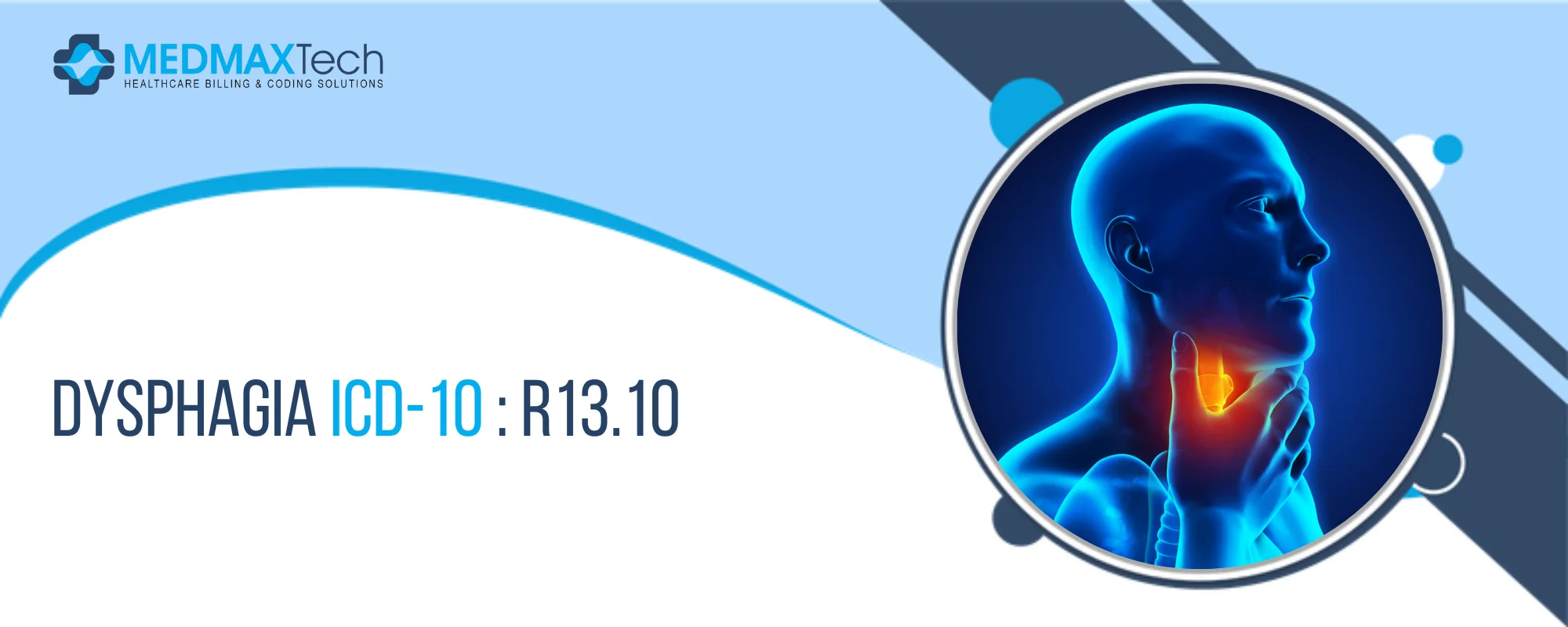
R13.10 : Dysphagia ICD-10
Accurate medical records are essential for quality patient care, and this is where medical coding services play a critical role. They convert detailed medical diagnoses, symptoms, and treatments into standardized codes that healthcare providers, insurance companies, and regulatory organizations can easily understand. One important code used in this process is ICD-10 Code R13.10, which is assigned to dysphagia, unspecified, a condition that describes difficulty swallowing.
Even though ICD-10 Code R13.10 may appear to be a simple diagnostic code, it is highly important for accurate clinical documentation, insurance billing, and reimbursement. Using the code correctly helps healthcare providers maintain complete patient records, avoid claim denials, and support better treatment outcomes.
In this article, we will explore what ICD-10 Code R13.10 means, when healthcare professionals should use it, and why accurate coding is essential for healthcare organizations.
Dysphagia ICD 10 : R13.10
The ICD-10 is a globally recognized system used to classify diseases, symptoms, and medical conditions. Each code represents a specific health condition and helps with accurate documentation, reporting, and billing.
R13.10 falls under Chapter 18 of the ICD-10 classification system, which covers “symptoms, signs, and abnormal clinical and laboratory findings, not elsewhere classified.” This code specifically identifies Dysphagia, unspecified, meaning the patient has difficulty swallowing, but the exact type or cause has not yet been determined.
Healthcare providers typically use this code when swallowing difficulties are confirmed, but additional tests are needed to determine whether the condition is oropharyngeal, esophageal, or another type of dysphagia. It serves as a temporary but accurate code for medical records and insurance claims until a more detailed diagnosis is available.
Specific codes under R13.1 Dysphagia include:
| Code | Condition |
|---|---|
| R | Indicates symptoms and abnormal findings |
| R13 | Refers to Dysphagia (difficulty swallowing) |
| R13.1 | Specifies Dysphagia, unspecified type |
| R13.10 | Represents Dysphagia, unspecified |
Sub-categories of Dysphagia Codes
| Code | Condition |
|---|---|
| R13.11 | Dysphagia, oral phase |
| R13.12 | Dysphagia, oropharyngeal phase |
| R13.13 | Dysphagia, pharyngeal phase |
| R13.14 | Dysphagia, pharyngoesophageal phase |
| R13.19 | Other dysphagia |
R13.10 is used when the physician has not identified the exact stage or cause of the swallowing problem. It works as a placeholder code that allows accurate reporting and documentation while additional evaluations are being completed.
Understanding Dysphagia
Dysphagia is a condition that makes it difficult to swallow food, liquids, or even saliva. People with dysphagia may experience discomfort, coughing, choking, or the feeling that food is stuck in their throat or chest.
This condition can affect people of all ages, but it is more common among older adults and individuals with neurological disorders. Because dysphagia can have many different causes, healthcare providers often use the unspecified code R13.10 during the early stages of evaluation.
Common causes of dysphagia include:
- Neurological conditions such as stroke, Parkinson’s disease, or multiple sclerosis
- Structural issues such as tumors, strictures, or scarring of the esophagus
- Inflammation or irritation caused by gastroesophageal reflux disease (GERD)
- Muscle weakness related to aging or injury
Since each cause requires different tests and treatment plans, using R13.10 allows healthcare providers to document the symptom correctly while further investigations are carried out.
When to Use R13.10 Code?
Healthcare providers use this code when a patient experiences swallowing difficulties, but the exact cause or type of dysphagia has not yet been identified. It should not be assigned if a specific type of dysphagia has already been diagnosed.
For example, if a patient reports difficulty swallowing both liquids and solid foods, but no diagnostic tests have been performed yet, the appropriate code would be R13.10, Dysphagia, unspecified.
After additional testing confirms the specific type of dysphagia, the code should be updated to the correct subcategory. For instance, if testing confirms oropharyngeal dysphagia, the code should be changed to R13.12.
Using the correct code at this stage helps ensure accurate documentation and prevents delays in claim processing.
Why is it Important to Accurately Code R13.10?
Accurate coding is essential for smooth healthcare operations. It impacts billing, compliance, documentation quality, and patient safety. Correctly assigning ICD-10 Code R13.10 helps healthcare providers document symptoms accurately while supporting both clinical care and financial performance.
Clinical Accuracy
Accurate coding ensures that medical records clearly reflect the patient’s symptoms and condition. When R13.10 is assigned correctly, it creates a clear record showing that the patient is experiencing swallowing difficulties, even if the underlying cause has not yet been identified.
This level of accuracy helps physicians, researchers, and healthcare organizations track dysphagia cases more effectively. It also supports treatment monitoring, trend analysis, and improved management of swallowing disorders across different patient populations.
Working with a trusted medical coding company helps healthcare providers apply codes such as R13.10 correctly, reducing documentation errors and supporting high-quality patient records.
Billing and Compliance
Using the correct ICD-10 code is critical for successful reimbursement and claim approval. When coding matches the provider’s documentation, claims are processed more efficiently with fewer delays and denials.
Proper use of R13.10 helps reduce coding errors that may result in audits, penalties, claim disputes, or payment delays. It also supports compliance with payer requirements and government regulations by ensuring documentation standards are met.
Coding Guidelines and Best Practices for R13.10
Accurate coding requires clear documentation, careful review, and compliance with ICD-10 guidelines. Below are some important coding guidelines and best practices for R13.10.
Confirm Clear Documentation
Before assigning R13.10, coders should confirm that the provider’s documentation clearly mentions difficulty swallowing. The term “dysphagia” or a similar clinical description should be included in the medical record. If the documentation is unclear, coders should request additional information from the physician before finalizing the code.
Partner with medical coding services USA can help healthcare organizations ensure that documentation reviews and coding assignments meet national compliance and accuracy standards.
Avoid Unnecessary Use of Unspecified Codes
Although R13.10 is a valid code, it should only be used when a more specific diagnosis is not available.
For example:
- If the difficulty occurs in the mouth or throat, use R13.11 – Dysphagia, oral phase.
- If the condition involves the swallowing process in the throat, use R13.12 – Dysphagia, oropharyngeal phase.
- If the phase or cause is already known, choose the most detailed and appropriate code instead of using the unspecified option.
Keep Documentation Updated
Once diagnostic tests such as swallow studies, endoscopy, or imaging identify the underlying cause, the medical record should be updated. Coders should replace R13.10 with the correct subtype of dysphagia to reflect the latest clinical findings.
This approach helps prevent outdated or incomplete information from remaining in patient records and supports accurate reporting.
Verify Compliance with Payer and ICD-10 Guidelines
All coding activities should follow the ICD-10-CM Official Guidelines for Coding and Reporting. Coders should also stay informed about payer-specific documentation requirements to reduce the risk of claim denials.
Accurate and compliant coding supports proper reimbursement while protecting healthcare organizations during audits and regulatory reviews.
Maintain Collaboration Between Coders and Providers
The accurate use of R13.10 depends on strong communication between physicians and coders. Healthcare providers must clearly document symptoms, test results, and diagnostic findings. Coders must then review the information carefully and assign the most appropriate code.
Consistent collaboration improves coding accuracy and reduces administrative errors.
Professional medical coding services play an important role in maintaining this accuracy. Certified coders carefully review physician documentation to ensure that codes such as R13.10 are assigned correctly and consistently.
Role of Outsourced Medical Coding
Many healthcare organizations face challenges in maintaining coding accuracy because ICD-10 codes are regularly updated. Partnering with medical coding outsourcing services can help overcome these challenges.
Outsourcing provides access to certified coding professionals who are trained to handle complex coding situations. These experts ensure that codes such as R13.10 are assigned correctly, helping reduce administrative errors and improve reimbursement outcomes.
In addition, outsourced coding teams can perform claim audits, quality reviews, and compliance checks to help healthcare providers stay current with industry regulations. This allows physicians and healthcare staff to spend more time focusing on patient care rather than administrative responsibilities.

Final Thoughts
ICD-10 Code R13.10, Dysphagia, unspecified, is much more than a simple code in a medical database. It identifies an important symptom that requires careful attention and accurate documentation. Correct use of this code helps healthcare professionals document patient conditions properly while additional testing determines the exact cause.
Through professional medical coding services, healthcare organizations can maintain accurate records, stay compliant with regulations, and achieve timely reimbursements. Proper use of codes such as R13.10 strengthens healthcare operations, improves patient outcomes, and supports better communication between providers, payers, and patients.
FAQs
What ICD-10 Code R13.10 mean?
It represents Dysphagia, unspecified, and is used when a patient has difficulty swallowing but the exact cause has not yet been identified.
When should R13.10 be used?
It should be used when swallowing difficulties are documented, but the specific type of dysphagia has not yet been confirmed.
Can outsourcing improve coding accuracy?
Yes. Medical coding outsourcing services provide certified professionals who ensure accurate, updated, and compliant coding practices.


Jessica Collins
Jessica Collins is a Medical Coding Expert with 9+ years of experience in ICD-10, CPT coding, clinical documentation, and revenue cycle management. She shares practical insights to improve coding accuracy, billing efficiency, and healthcare compliance.