While you focus on patient care, know that Medmax handles your complicated operational and analytical tasks. Our full range of services lets you take a sigh of relief!
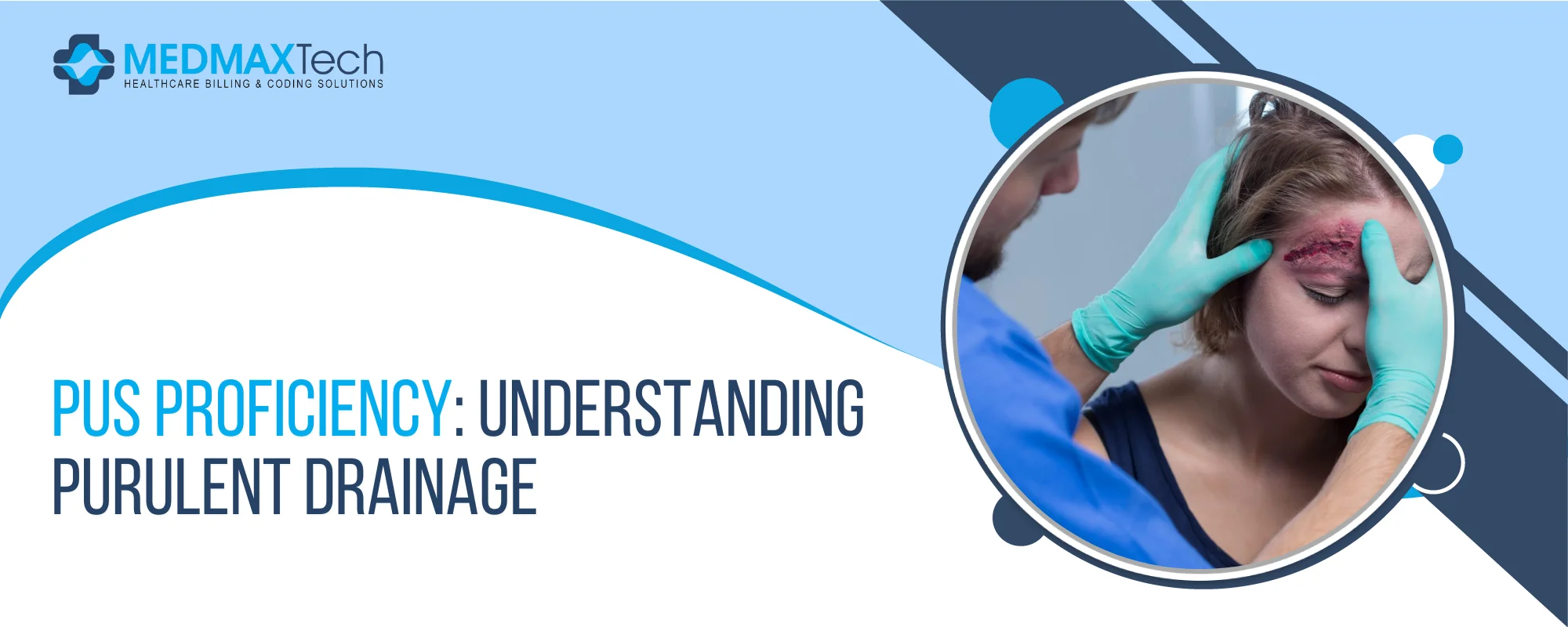
Wound drainage management is a key part of proper wound care. The presence of purulent drainage helps show whether an infection is present and how well the wound is healing. Non-healing wounds affect millions of people in the United States and are especially common in adults over the age of 65. Understanding the features, effects, and correct management of purulent drainage is important for achieving proper wound healing.
Purulent Drainage: The Basics
Characteristics
Purulent drainage, also known as pus, is a thick and cloudy fluid produced by the body during an inflammatory response to infection. It commonly contains dead white blood cells, bacteria, tissue debris, and proteins that build up while the body fights infection.
Pus may appear cream-colored, yellow-green, brown, or even pink-tinged if blood or other pathogens are present. In most cases, there is some level of odor, which can range from mild to very strong.
Mechanism
Pus forms as part of the body’s immune response when pathogens enter the body. When bacteria break through the skin’s protective barrier, neutrophils, a type of specialized white blood cell, move to the infected area. These cells perform phagocytosis, where they consume and destroy the invading bacteria. After this process, the neutrophils die.
The buildup of dead neutrophils, bacteria, and tissue debris creates pus. This sequence of events is known as the inflammatory cascade:
Pathogen enters the body and triggers an immune response
Neutrophils move to the wound site
Phagocytosis occurs
Dead neutrophils and debris collect
Purulent drainage forms
Clinical Significance
The presence of pus usually signals an infection and often requires medical care. However, not every case of purulent drainage means a severe infection. The wound’s condition, the amount of drainage, and related symptoms must all be evaluated.
Signs that suggest medical treatment is needed include:
Volume changes: An increase in pus may indicate worsening infection
Color transitions: Normal drainage is clear or pale. Purulent drainage is thick and milky. Green, yellow, or brown pus suggests infection progression
Consistency: Normal drainage is thin, while purulent drainage is much thicker
Associated wound characteristics: Healing wounds have little or no odor. A foul smell, warmth, redness, or red streaks around the wound may indicate cellulitis
Systemic symptoms: Pain, fever, and a high white blood cell count may occur with infection
Assessment and Management of Purulent Drainage
Visual Examination
Basic wound assessment principles should always be followed:
Identify the wound type and cause
Assess the patient’s overall health to understand healing potential. Elderly patients, diabetics, and immunocompromised individuals often heal more slowly
Document wound size, depth, and location
Check for infection. Drainage alone does not always mean infection, but the appearance and type must be documented
Common types of wound drainage include:
Sanguineous: Seen shortly after injury and contains fresh blood. It appears bright red or pink and should decrease quickly
Serous: Clear, light drainage without odor. It supports healing and is common in partial-thickness wounds. Excessive amounts may indicate edema or infection
Serosanguineous: A mix of serous and sanguineous drainage. It is thin, pale, and slightly red and often shows an improving infection
Serous purulent drainage: Thin, pale drainage made mainly of white blood cells, commonly seen within the first 48–72 hours
Wound Healing Stages
Confirm that the wound is moving normally through the healing stages:
Hemostasis: A fibrin clot forms to stop bleeding
Inflammation: Neutrophils and macrophages fight infection
Proliferation: New skin and blood vessels develop
Remodeling: The skin strengthens and matures
Wounds, especially infected ones, should be reassessed regularly. Any changes must be documented and reported immediately.
Measurement and Diagnosis
Culturing Wounds
All open wounds contain bacteria, and healing can still occur. The type of bacteria is more important than the number present.
Two swab techniques are commonly used:
Levine technique: Pressure is applied while rotating the swab over a small area. Research supports this method as more accurate
Z technique: The swab is moved in a zigzag pattern across the wound surface
Other Diagnostic Methods
Additional tests may be required in some cases:
Wound biopsy: Useful for diagnosing invasive burn wounds
Bone biopsy: The gold standard for diagnosing osteomyelitis
Laboratory studies: Tests such as serum prealbumin, ESR, and CRP may help assess nutrition and infection
Imaging: Ultrasound, CT, or MRI can identify fluid buildup, dead tissue, or inflammation
Assessment and Documentation
Because wound care often involves a multidisciplinary team, consistent documentation is essential. Standardized tools help with diagnosis and tracking progress.
Bates Jensen Wound Assessment Tool
This tool evaluates 15 wound characteristics, including size, depth, exudate, tissue type, and surrounding skin condition. Scores help track wound healing over time.
TIMERS
This observation-based tool focuses on:
Tissue management
Infection/inflammatio
Moisture
Epithelial edge
Repair/regeneration
Social factors
REEDA
Although mainly used for perineal wounds, REEDA evaluates redness, swelling, bruising, discharge, and wound closure and may be applied to other wounds.
AI-powered wound imaging software allows providers to compare wound images with large databases, improving diagnosis and treatment tracking.
Treatment for Purulent Drainage
Treatment for purulent drainage should begin quickly to prevent complications. Care depends on wound size, location, healing stage, and patient health. The main goals are preventing further damage and keeping the wound clean.
Dressing choice and cleansing depend on infection type. Conditions such as venous insufficiency may require compression and elevation. Negative pressure wound therapy may be used for deep or chronic wounds.
Antibiotics are often prescribed, and abscesses may require drainage or surgical debridement.
Complications
Untreated wound infections can spread and cause serious problems:
Cellulitis: Affects deeper skin layers and causes warmth, redness, and streaking
Osteomyelitis: A bone infection that causes pain, swelling, fever, and fatigue
Sepsis: A life-threatening bloodstream infection requiring immediate care
Necrotizing soft tissue wounds: Rare but life-threatening infections
Diagnosis is mostly clinical. The LRINEC score helps identify necrotizing infections using lab values such as CRP, white blood cell count, and glucose. If suspected, surgery must not be delayed.
Multidisciplinary Approach
Infected wounds require care from surgeons, infectious disease specialists, physical therapists, and wound care teams. The patient also plays a vital role.
Improved Self-Management
Patient education improves understanding of wound care and encourages proper hygiene and treatment compliance.
Prevention of Complications
Teaching patients to recognize infection signs leads to earlier treatment and fewer complications.
Healthy Lifestyle Choices
Education on nutrition, smoking cessation, and managing chronic conditions like diabetes improves healing outcomes.
Superior Surgical Wound Care
Keeping surgical wounds clean and dry is essential, with care tailored to each patient.
Improved Communication
Educated patients communicate better with providers, improving recovery and follow-up.
Reduced Healthcare Costs
Better education leads to fewer complications, hospital stays, and treatments.
Managing Purulent Drainage: Today and in the Future
Most purulent drainage care still follows basic steps: assessment, culturing, proper cleaning, dressing, and treatment. A team-based approach remains essential.
New treatments such as bacteriophage therapy, growth factors, bioengineered tissues, and stem cell treatments show promise. Advanced dressings and technologies may further improve wound healing in the future.
Williams ClarkDenial Management | CHC
Williams Clark is a dual-certified healthcare professional with CPC and CHC credentials. With over a decade of experience in medical billing and compliance auditing, David provides deep insights into payer policies, denial prevention, and accurate coding practices. His mission is to empower medical billers and healthcare providers with the knowledge to stay compliant and profitable.
Williams Clark is a dual-certified healthcare professional with CPC and CHC credentials. With over a decade of experience in medical billing and compliance auditing, David provides deep insights into payer policies, denial prevention, and accurate coding practices. His mission is to empower medical billers and healthcare providers with the knowledge to stay compliant and profitable.