




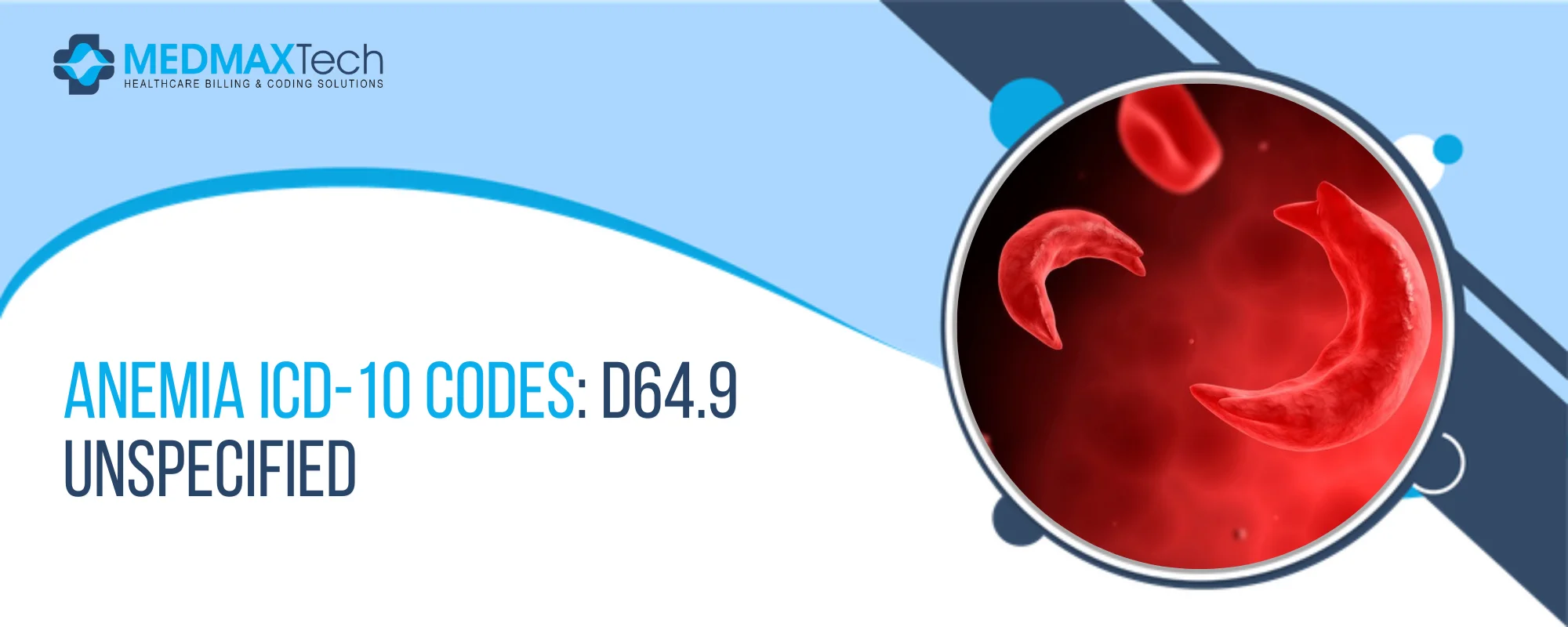
Anemia ICD-10 Codes: D64.9 Unspecified
Also known as a low blood count or tired blood count, anemia is a common condition that can affect people of all ages. It happens when the body does not have enough healthy red blood cells (hemoglobin) to carry oxygen from the lungs to the rest of the body.
A lack of healthy red blood cells can cause several other problems, including:
- Fatigue
- Headaches
- Weakness
- Dizziness
- Shortness of breath
- Irregular Heartbeat
Several factors can cause anemia. These include nutritional deficiencies caused by an unhealthy or poor diet, blood loss from heavy periods, internal bleeding, intestinal problems, chronic disorders, genetic conditions, and infections. People with anemia often feel weak and tired.

Classification of Anemia
Below are the main categories of anemia to help you understand the condition better.
- Microcytic Anemia
- Normocytic Anemia
- Macrocytic Anemia
Microcytic Anemia
Microcytic anemia is mainly caused by iron deficiency and is identified by the presence of small red blood cells. Other common causes include thalassemia, lead poisoning, and anemia related to chronic diseases.
Normocytic Anemia
Normocytic anemia is characterized by red blood cells that are normal in size. These cells are larger than those found in microcytic anemia but smaller than those found in macrocytic anemia. Although the cells are normal in size, they may be present in lower numbers. This type of anemia can be caused by chronic kidney disease, cancer, bone marrow problems, and certain medications.
Macrocytic Anemia
As the name indicates, macrocytic anemia is identified by large red blood cells. It is commonly caused by a deficiency of vitamin B12 or folic acid. Other possible causes include liver disease, alcoholism, and the use of certain medications.
Understanding D64.9 Diagnosis Code for Anemia
Before discussing the different types of anemia and the ICD-10 codes used to classify them, let’s first take a closer look at ICD-10 Code D64.9 – Anemia, Unspecified.
D64.9: Anemia, Unspecified
In the medical billing industry, D64.9 is a billable ICD-10 code used to report ‘anemia, unspecified’. This code falls under the chapter covering diseases of the blood and blood-forming organs and disorders of the immune mechanism.
Explanation of D64.9
Healthcare providers usually use this code when a patient has anemia, but the specific type or cause has not been identified. D64.9 may be used when complete diagnostic testing has not been performed or when the available test results are inconclusive.
Symptoms of D64.9 Anemia
The symptoms of anemia can be easy to notice and may vary depending on the underlying cause. When a chronic disease causes anemia, its symptoms may be hidden by the primary condition. In such cases, anemia may be discovered during tests performed for another health problem.
Depending on the cause, some patients may not experience clear signs or symptoms. Possible symptoms include weakness, pale skin, irregular heartbeat, fatigue, shortness of breath, lightheadedness, chest pain, headaches, and cold hands or feet.
Some of the most common symptoms of anemia are explained below:
Fatigue and Weakness
Fatigue is one of the most common and noticeable symptoms of anemia. A person with anemia may feel low on energy and tired most of the time. This happens because the blood cannot deliver enough oxygen to different parts of the body. As a result, the person may experience tiredness, lethargy, exhaustion, and drowsiness.
Shortness of Breath
When a patient has anemia, the body may try to compensate for the lack of oxygen by increasing the heart rate and breathing rate. This happens because the tissues are not receiving enough oxygen.
As a result, a person may experience shortness of breath during physical activity. For example, someone with anemia may start breathing heavily after performing a physically demanding task.
Pale or Yellowish Skin
Anemia is one of the main reasons for a reduced number of healthy red blood cells. This reduction can decrease blood flow to different parts of the body, including the skin and mucous membranes. As a result, the skin may look pale or yellowish and may lose its normal healthy appearance.
Dizziness and Lightheadedness
When the blood does not contain enough healthy red blood cells to deliver oxygen to different parts of the body, it can cause weakness and fatigue. If the brain does not receive enough oxygen-rich blood, the patient may also experience dizziness or lightheadedness. These symptoms can become more noticeable when the person suddenly stands up or performs physical activity.
Fast or Irregular Heartbeat
A fast or irregular heartbeat is another common symptom associated with anemia. This irregular heartbeat is known as arrhythmia and should not be ignored. Although an irregular heartbeat can also result from stress, excessive caffeine, or certain medications, anemia can also be a contributing cause.
Important: The severity of these symptoms can vary from one patient to another depending on their overall health, the type of anemia, and how severe the condition is. If you or someone you know experiences these symptoms, consult a healthcare provider for proper evaluation and treatment.
ICD-10 Codes for Different Types of Anemia
If you want to learn about the different types of anemia and their specific ICD-10 codes, the section below provides useful information.
Iron Deficiency Anemia
Iron deficiency anemia occurs when the body does not have enough iron. Iron is an important mineral needed to produce hemoglobin and healthy red blood cells. When the body does not have enough iron, it may not produce enough hemoglobin.
Some common causes of iron deficiency anemia include malnutrition, frequent blood donation, digestive conditions such as Crohn’s disease, endurance training involving heavy physical activity, and surgical removal of part of the gut.
ICD-10 Code for Iron Deficiency Anemia: D50
The accurate ICD-10 codes for iron deficiency anemia include:
| ICD-10 Code | Description |
|---|---|
| D50.0 | Iron deficiency anemia secondary to blood loss (chronic) |
| D50.1 | Sideropenic dysphasia |
| D50.8 | Other iron deficiency anemias |
| D50.9 | Iron deficiency anemia, unspecified |
Vitamin Deficiency Anemia
Vitamin deficiency anemia occurs when the body does not have enough vitamin B12 or folate, which are needed to produce healthy red blood cells. Healthcare providers may recommend dietary supplements and a nutrient-rich diet to help correct a deficiency of folic acid and vitamin B-12.
ICD-10 Codes for Vitamin Deficiency Anemia: D51
| ICD-10 Code | Description |
|---|---|
| D51.0 | Intrinsic factor deficiency causing lack of vitamin B12 |
| D51.1 | Lack of vitamin B12 anemia due to malabsorption of B12 with proteinuria. |
| D51.2 | Transcobalamin II deficiency |
| D51.3 | Other dietary vitamin B12 deficiency anemia |
| D51.8 | Other vitamin B12 deficiency anemias |
| D51.9 | Vitamin B12 deficiency anemia, unspecified |
Folate Deficiency Anemia
Folate deficiency anemia develops when the body does not have enough folic acid. Folate is a type of B vitamin that plays an important role in producing healthy red blood cells. A lack of folate can lead to a lower red blood cell count or cause red blood cells to become abnormally large. Folate deficiency may cause symptoms such as fatigue, pale skin, and a sore or tender tongue.
ICD-10 Codes for Folate Deficiency Anemia: D52
| ICD-10 Code | Description |
|---|---|
| D52.0 | Dietary folate deficiency anemia |
| D52.1 | Drug-induced folate deficiency anemia |
| D52.8 | Other folate deficiency anemias |
| D52.9 | Folate deficiency anemia, unspecified |
Other Nutritional Anemias
Nutritional anemias occur when the body does not get enough vitamins and minerals needed to produce healthy red blood cells. Common examples include megaloblastic anemia and iron deficiency anemia caused by folate or B12 deficiency. Other possible causes include deficiencies of vitamins A, B2, B6, C, D, and E, as well as zinc and copper.
ICD-10 Codes for other nutritional anemias: D53
| ICD-10 Code | Description |
|---|---|
| D53.0 | Protein deficiency anemia |
| D53.1 | Other megaloblastic anemias, not elsewhere classified |
| D53.2 | Scorbutic anemia |
| D53.8 | Other specified nutritional anemias |
| D53.9 | Nutritional anemia, unspecified |
Hemolytic Anemia
Hemolytic anemia occurs when red blood cells are destroyed faster than the body can replace them with healthy cells. This process is known as hemolysis. It can be caused by genetic conditions, infections, certain medications, or autoimmune disorders.
Common symptoms of hemolytic anemia include fatigue, jaundice, dark urine, pale skin, fever, weakness, confusion, and dizziness. Hemolytic anemia can occur in several forms, including sickle cell disorder, thalassemia, enzyme disorders, and other genetic conditions.
ICD-10 Codes for Anemia Due to Enzyme Disorders: D55
| ICD-10 Code | Description |
|---|---|
| D55.0 | Anemia due to glucose-6-phosphate dehydrogenase [G6PD] deficiency |
| D55.1 | Anemia due to other disorders of glutathione metabolism |
| D55.2 | Anemia due to disorders of glycolytic enzymes |
| D55.3 | Anemia due to disorders of nucleotide metabolism |
| D55.8 | Other anemias due to enzyme disorders |
| D55.9 | Anemia due to enzyme disorder, unspecified |
ICD-10 Codes for Anemia Due to Thalassemia: D56
| ICD-10 Code | Description |
|---|---|
| D56.0 | Alpha thalassemia |
| D56.1 | Beta thalassemia |
| D56.2 | Delta-beta thalassemia |
| D56.3 | Thalassemia minor |
| D56.4 | Hereditary persistence of fetal hemoglobin (HPFH) |
| D56.5 | Hemoglobin E-beta thalassemia |
| D56.8 | Other thalassemias |
| D56.9 | Thalassemia, unspecified |
ICD-10 Codes for Anemia Due to Sickle-Cell Disorders: D57
| ICD-10 Code | Description |
|---|---|
| D57.0 | Hb-SS disease with crisis |
| D57.1 | Sickle-cell disease without crisis |
| D56.2 | Sickle-cell/Hb-C disease |
| D57.3 | Sickle-cell trait |
| D57.4 | Sickle-cell thalassemia |
| D57.8 | Other sickle-cell disorders |
ICD-10 Codes for Other Hereditary Hemolytic Anemias: D58
| ICD-10 Code | Description |
|---|---|
| D58.0 | Hereditary spherocytosis |
| D58.1 | Hereditary elliptocytosis |
| D58.2 | Other hemoglobinopathies |
| D58.8 | Other specified hereditary hemolytic anemias |
| D58.9 | Hereditary hemolytic anemia, unspecified |
ICD-10 Codes for Acquired Hemolytic Anemia: D59
| ICD-10 Code | Description |
|---|---|
| D59 | Acquired hemolytic anemia |
| D59.0 | Drug-induced autoimmune hemolytic anemia |
| D59.1 | Other autoimmune hemolytic anemias |
| D59.2 | Drug-induced non autoimmune hemolytic anemia |
| D59.3 | Hemolytic-uremic syndrome |
| D59.4 | Other non autoimmune hemolytic anemias |
| D59.5 | Paroxysmal nocturnal hemoglobinuria [Marchiafava-Micheli] |
| D59.6 | Hemoglobinuria due to hemolysis from other external causes |
| D59.8 | Other acquired hemolytic anemias |
| D59.9 | Acquired hemolytic anemia, unspecified |
Aplastic Anemia
Aplastic Anemia is a rare but serious blood condition. It occurs when the bone marrow loses its ability to produce enough new blood cells for the body to function normally. Depending on whether the condition is mild or severe, aplastic anemia may develop slowly or progress quickly.
Several factors can cause this condition, including long-term exposure to toxic chemicals, viral infections, inherited disorders, cancer treatment, and certain medications. One treatment option is a blood transfusion, which can help increase the number of red blood cells.
In some cases, surgeons may recommend a bone marrow transplant when the bone marrow is damaged by disease and cannot produce healthy blood cells. The following codes are important for healthcare providers to claim their reimbursements from the payors.
ICD-10 Codes for Aplastic Anemia: D60
| ICD-10 Code | Description |
|---|---|
| D60 | Acquired pure red cell aplasia [erythroblastopenia] |
| D61 | Other aplastic anemias and other bone marrow failure syndromes |
| D61.0 | Constitutional aplastic anemia |
| D61.1 | Drug-induced aplastic anemia |
| D61.2 | Aplastic anemia due to other external agents |
| D61.3 | Idiopathic aplastic anemia |
| D61.8 | Other specified aplastic anemias and other bone marrow failure syndromes |
| D61.9 | Aplastic anemia, unspecified |
Anemia for Chronic Disease
Anemia for Chronic Disease or ACD can occur when chronic conditions, infections, or other illnesses cause inflammation in the body. This inflammation can reduce the number of red blood cells and affect how the body uses iron. ACD is usually mild to moderate and may not cause serious symptoms.
The challenging part is that there is no single treatment for ACD. Instead, doctors usually focus on treating the underlying condition. When symptoms are severe, doctors may use synthetic erythropoietin injections. Erythropoietin is a hormone normally produced by the kidneys that helps stimulate red blood cell production and may reduce fatigue.
ICD-10 Codes for Anemia Due to Chronic Disease classified elsewhere: D63
| ICD-10 Code | Description |
|---|---|
| D63.0 | Anemia in neoplastic disease |
| D63.1 | Anemia in chronic kidney disease |
| D63.8 | Anemia in other chronic diseases classified elsewhere |
ICD-10 Codes for Other Anemias: D64
| ICD-10 Code | Description |
|---|---|
| D64.0 | Genetic sideroblastic anemia |
| D64.1 | Secondary sideroblastic anemia due to disease |
| D64.2 | Secondary sideroblastic anemia due to drugs and toxins |
| D64.3 | Other sideroblastic anemia |
| D64.8 | Other specified anemias |
| D64.9 | Anemia, unspecified |
Challenges Faced by Healthcare Providers
Healthcare providers and medical billing teams may face several coding challenges when dealing with anemia. Some of the most common challenges are discussed below.
Identifying The Root Cause
Anemia can develop because of many different underlying conditions. These can range from nutritional deficiencies to chronic diseases and hereditary conditions. To receive correct and timely reimbursements for medical services, healthcare providers need to identify the underlying cause and document the correct diagnosis code.
Coding accuracy
As discussed above, anemia has many different forms and causes, and each type may require a specific ICD-10 code. Selecting the correct ICD-10 code that accurately represents the patient’s condition can be challenging.
The International Classification of Diseases system is regularly updated. Because of this, healthcare providers, medical billers, and coders need to stay current with the recent updates related to anemia and other conditions. Staying updated is important for maintaining accurate records, stay away from denials, and receiving the correct reimbursement for medical services.
Accurate Coding and Documentation
Accurate coding depends heavily on complete and clear documentation. A problem with either one can create problems with the other. For example, incomplete or unclear documentation may lead to a claim denial, even when the correct code has been selected.
Similarly, incorrect coding can result in reimbursement problems even when the medical documentation is complete and accurate. Medical billing teams should work closely with healthcare providers to obtain complete information and confirm the exact type of anemia being treated.
Code Sequencing
When anemia occurs along with another medical condition, selecting the correct primary diagnosis and sequencing codes can be challenging. For example, during documentation and claim preparation, coders must carefully distinguish between Hemolytic Anemia and Aplastic Anemia.
Incorrect code sequencing can affect revenue collection from the payors for healthcare services. The same applies when distinguishing between acute and chronic anemia because each may have different coding and documentation requirements.
Managing these situations correctly requires coding knowledge, proper documentation, regular training, attention to detail, and compliance with coding guidelines.
Doing Everything Right But Still Not Getting Paid….
Sometimes the problem isn’t your team—it’s the system. Our clients recover tens of thousands simply by letting us take a look.
- No more resubmitting again and again 95% Claim Approval Rate
- No delays, no backlog, just clean submissions 24-hour Claim Turnaround
- 100% HIPAA-compliant, audit-proof systems HIPAA Compliance
- Track every dollar and denial in real time Weekly, Monthly Reports
Conclusion
Anemia is a common condition that affects millions of Americans and people around the world. Because anemia has different types, causes, and levels of severity, its diagnosis, treatment, and management can become challenging. Healthcare providers, medical billers, and coders may also find it difficult to select the correct ICD-10 codes for accurately reporting different types of anemia.
Keeping up with regular ICD code changes and revisions, along with accurate coding and complete documentation, helps healthcare providers report diagnoses correctly and improve reimbursement. If you are busy treating patients and do not have enough time to manage coding for anemia and related conditions, consider consulting Medmax Technologies LLC.
We are one of the leading medical billing companies in the US, with expertise in ICD-10 codes, CDT, and HCPCS modifiers. Our support allows healthcare providers to focus on patient care while we work to improve revenue, reduce denials, and streamline revenue cycle management.
Our experienced and highly certified medical billers and coders stay informed about the latest changes and revisions in the coding system. They focus on providing unmatched medical billing services that are HIPAA-compliant, reducing errors, and supporting accurate claim creation, submission, and reimbursement for your medical services.



Jessica Collins
Jessica Collins is a Medical Coding Expert with 9+ years of experience in ICD-10, CPT coding, clinical documentation, and revenue cycle management. She shares practical insights to improve coding accuracy, billing efficiency, and healthcare compliance.