





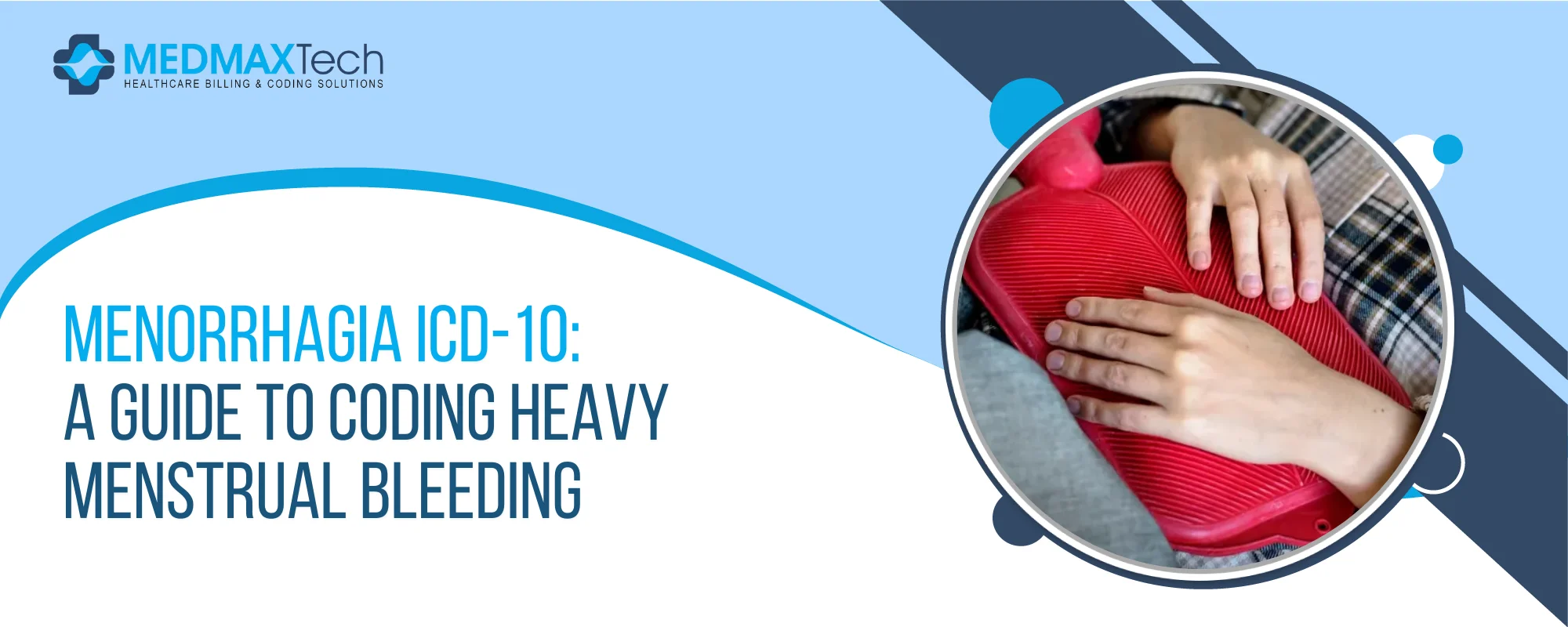
Menorrhagia ICD-10: A Guide to Coding Heavy Menstrual Bleeding
Menorrhagia, also known as heavy menstrual bleeding (HMB), a common condition that affects millions of women around the world. It means that menstrual bleeding is unusually heavy, lasts for a long time, or both. It is one of the most common gynecological problems in women of reproductive age. Menorrhagia can interfere with everyday activities and lower a woman’s quality of life. It can also cause anemia, tiredness, and other health problems. Accurate diagnosis, documentation, and coding of Menorrhagia are important for proper treatment, correct insurance reimbursement, and better overall management of the condition.
The ICD-10 (International Classification of Diseases, 10th edition) coding system is widely used to classify medical conditions and document diagnoses. It provides standard codes that help healthcare providers, insurance companies, and other healthcare professionals understand a patient’s condition. In this article, we will explain the ICD-10 codes related to Menorrhagia, discuss how the condition is diagnosed, and review best practices for Healthcare provider.
Understanding Menorrhagia
Menorrhagia is abnormally heavy or prolonged menstrual bleeding that happens during a woman’s regular menstrual cycle. The World Health Organization (WHO) has traditionally described heavy menstrual bleeding as blood loss of more than 80 milliliters during a menstrual period. However, the amount can vary between individuals, and how heavy the bleeding feels to the patient is also important.
Common causes of Menorrhagia include:
Uterine Fibroids: These are non-cancerous growths in the uterus that can cause heavy or prolonged bleeding.
Endometriosis: This condition occurs when tissue similar to the uterine lining grows outside the uterus. It can cause pelvic pain and heavy menstrual bleeding.
Hormonal Imbalance: Conditions such as polycystic ovary syndrome (PCOS) and thyroid disorders can affect hormone levels and cause abnormal bleeding.
Blood Disorders: Conditions such as von Willebrand disease and other clotting disorders can make menstrual bleeding heavier than normal.
Common symptoms of Menorrhagia include:
- Bleeding that lasts longer than 7 days
- Passing large blood clots
- Needing to change sanitary products every 1-2 hours
- Fatigue or anemia caused by blood loss
Diagnosing Menorrhagia usually starts with a detailed medical history and physical examination. Doctors may also order blood tests, such as a complete blood count (CBC), to check for anemia. Imaging tests, including ultrasound or hysteroscopy, may be used to find possible causes of the heavy bleeding.
ICD-10 Coding System
ICD-10 is an internationally recognized system used to classify and code medical diagnoses. It gives each medical condition a specific alphanumeric code. These codes make it easier for healthcare professionals to document conditions, communicate with one another, process insurance claims, and maintain medical records.
Each ICD-10 code has different levels of detail:
- A category usually contains 3 characters and identifies a general group of diseases or conditions.
- Subcategories add more information and provide a more specific diagnosis.
- Additional digits may give further details about the condition.
For example, the N92 category includes different types of abnormal menstrual bleeding.
Some commonly referenced codes include:
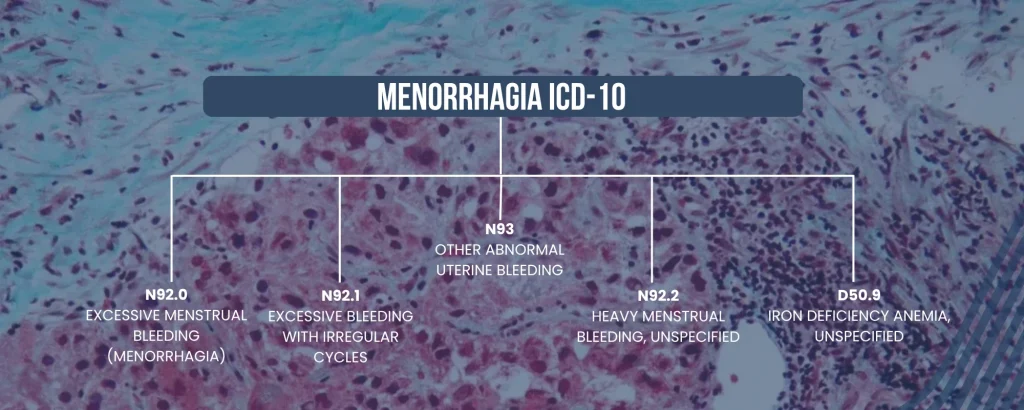
- N92.0 – Excessive Menstrual Bleeding (Menorrhagia)
- N92.1 – Excessive Bleeding with Irregular Cycles
Using the correct code helps ensure that the patient’s condition is documented accurately and supports proper treatment, insurance claims, and medical reporting.
ICD-10 Codes for Menorrhagia
ICD-10 includes codes that describe different patterns of abnormal menstrual bleeding. The most relevant codes include:
N92.0 – Excessive Menstrual Bleeding (Menorrhagia)
This code is used for excessive menstrual bleeding or Menorrhagia when the condition is documented as such. It is one of the commonly used codes for patients with heavy menstrual bleeding.
N92.1 – Excessive Bleeding with Irregular Cycles
This code is used when heavy menstrual bleeding occurs together with irregular menstrual cycles. Hormonal imbalances and polycystic ovary syndrome (PCOS) can sometimes cause both irregular cycles and excessive bleeding.
N92.2 – Excessive Menstruation at Puberty
This code is used for excessive menstrual bleeding associated with puberty. It should not be confused with general heavy menstrual bleeding in adult women.
Other Related Codes
N93 – Other Abnormal Uterine Bleeding: This category is used for other types of abnormal uterine bleeding that do not fit the specific Menorrhagia codes.
D50.9 – Iron Deficiency Anemia, Unspecified: This secondary code may be used when Menorrhagia has caused iron deficiency anemia, when supported by the provider’s documentation.
Diagnosing Menorrhagia: Clinical Guidelines and Documentation
Accurate coding begins with clear clinical documentation. Healthcare providers should document the patient’s symptoms, examination findings, test results, and any identified causes.
Important documentation may include:
Detailed Menstrual History: Record how often the patient has periods, how long the bleeding lasts, how heavy the bleeding is, and whether blood clots are present.
Physical Examination: Document findings such as signs of anemia, blood pressure, abdominal findings, and gynecological examination results when performed.
Tests and Imaging: Blood tests may include a CBC, thyroid function tests, and coagulation studies when appropriate. Imaging such as ultrasound or hysteroscopy may help identify conditions such as fibroids or endometrial hyperplasia.
Good documentation allows coders to select the most appropriate ICD-10 code and helps ensure that the patient’s medical record accurately reflects the condition.
Check our other ICD-10 Blogs:
Abdominal Pain ICD 10 : Complete Provider Guide to Clean Claims
ICD-10 Code for Fatigue: Codes, Documentation & Tips
How to Code for Peripheral Artery Disease (PAD)
and many more….
Differential Diagnosis and When to Use Menorrhagia Codes
When evaluating Menorrhagia, healthcare providers should consider other conditions that can cause heavy or abnormal bleeding. Finding the underlying cause can help determine the most appropriate diagnosis and coding.
Some conditions that may cause symptoms similar to Menorrhagia include:
Endometrial Hyperplasia
Endometrial hyperplasia happens when the lining of the uterus becomes too thick. It can cause abnormal or heavy bleeding and is often related to hormonal changes, including excess estrogen. Ultrasound and sometimes an endometrial biopsy may be needed to evaluate the condition.
ICD-10 code: N85.0 – Endometrial Hyperplasia
Uterine Fibroids (Leiomyomas)
Uterine fibroids are non-cancerous growths that develop in or around the uterus. They can cause heavy or prolonged menstrual bleeding, pelvic pressure, and other symptoms.
ICD-10 code: D25.9 – Uterine Leiomyoma, Unspecified
When fibroids are documented as a cause or associated condition, the appropriate fibroid code should be assigned according to the coding guidelines and documentation.
Adenomyosis
Adenomyosis occurs when endometrial tissue grows into the muscular wall of the uterus. It can cause heavy and painful periods.
ICD-10 code: N80.0 – Endometriosis of uterus
Thyroid Disorders
Both hypothyroidism and hyperthyroidism can affect menstrual cycles and may contribute to abnormal or heavy bleeding. Thyroid function testing may help identify a thyroid-related cause.
Common ICD-10 codes include:
E03.9 – Hypothyroidism, Unspecified
E05.9 – Thyrotoxicosis, Unspecified
Coagulation Disorders
Inherited or acquired bleeding disorders, including von Willebrand disease and platelet disorders, may cause heavy menstrual bleeding. These conditions should be considered when a patient has easy bruising, prolonged bleeding after injuries, or a family history of bleeding problems.
ICD-10 code: D68.9 – Coagulation Defect, Unspecified
Polycystic Ovary Syndrome (PCOS)
PCOS is a common condition that can cause irregular menstrual cycles. Some women with PCOS may also have heavy or prolonged bleeding, especially when ovulation is irregular or absent.
ICD-10 code: E28.2 – Polycystic Ovarian Syndrome
When Menorrhagia is associated with an underlying condition, the coding should accurately reflect the documented diagnoses. Depending on the circumstances and applicable coding guidelines, more than one code may be required.
For example, when a patient has documented uterine fibroids and Menorrhagia, the record may include:
- D25.9 – Uterine Leiomyoma, Unspecified
- N92.0 – Excessive Menstrual Bleeding (Menorrhagia)
If a bleeding disorder contributes to heavy menstrual bleeding, an appropriate code for the bleeding disorder may also be reported when supported by the documentation.
Coding Complex Cases of Menorrhagia
Some patients have Menorrhagia along with other medical conditions or complications. These cases require careful review of the documentation so that all relevant diagnoses are captured correctly.
Case 1: Menorrhagia with Anemia
Long-term heavy menstrual bleeding can result in iron deficiency anemia. Anemia is a common complication of significant blood loss and may need to be coded separately when diagnosed and documented.
ICD-10 code for Iron Deficiency Anemia: D50.9 – Iron Deficiency Anemia, Unspecified
When appropriate, coding may include both:
- N92.0 – Excessive Menstrual Bleeding
- D50.9 – Iron Deficiency Anemia, Unspecified
This combination reflects both the heavy menstrual bleeding and the related anemia.
Case 2: Menorrhagia with Polycystic Ovary Syndrome (PCOS)
PCOS can cause irregular menstrual cycles and abnormal bleeding. When both conditions are documented, appropriate codes may include:
- N92.0 – Excessive Menstrual Bleeding (Menorrhagia)
- E28.2 – Polycystic Ovary Syndrome
The exact code selection should be based on the provider’s documentation and applicable coding guidelines.
Case 3: Menorrhagia in Perimenopause
Perimenopause is the transition period before menopause. During this time, hormonal changes can cause periods to become irregular, heavier, lighter, or less predictable.
Heavy bleeding during perimenopause should not automatically be considered a normal change. Other causes may need to be evaluated, especially when bleeding is unusually heavy or persistent.
N95.0 – Menopausal and Postmenopausal Bleeding applies to menopausal and postmenopausal bleeding and should not automatically be used for every patient who is simply in perimenopause. The appropriate code should be selected based on the patient’s documented condition.
Case 4: Menorrhagia with Uterine Cancer
Uterine cancer can sometimes present with abnormal or heavy vaginal bleeding. It is important to evaluate unusual bleeding, especially in patients with risk factors or concerning symptoms.
Possible ICD-10 codes for uterine cancer include:
- C54.1 – Malignant Neoplasm of Endometrium
- C55 – Malignant Neoplasm of Uterus, Unspecified
When cancer is diagnosed, the appropriate cancer code should be reported based on the documented site and diagnosis. Additional codes may be required depending on the patient’s other conditions.
For complex cases, detailed documentation is essential. The medical record should include the relevant diagnoses, examination findings, test results, and treatment plan. This helps ensure that coding accurately represents the patient’s condition.
Best Practices for Accurate ICD-10 Coding for Menorrhagia
Correct coding for Menorrhagia helps healthcare providers document the patient’s condition, support appropriate treatment, and reduce problems with insurance claims. The following practices can help improve coding accuracy.
Thorough Documentation
Document the patient’s symptoms clearly. Include the severity of the bleeding, how long it lasts, the frequency of bleeding, the presence of blood clots, and other symptoms such as fatigue or pain.
Any underlying or contributing conditions, such as fibroids, PCOS, or thyroid disorders, should also be documented when diagnosed.
Use Specific Codes
Use the most specific ICD-10 code supported by the medical record. Do not select a more specific cause unless it has been documented by the healthcare provider.
For example, if fibroids are diagnosed, the appropriate fibroid code should be considered along with the bleeding diagnosis when required by coding guidelines.
Avoid General Terms
Avoid vague descriptions such as “abnormal bleeding” when the clinical documentation supports a more specific diagnosis. Clearly document whether the bleeding is excessive, prolonged, irregular, or related to another condition.
Collaboration Between Clinicians and Coders
Good communication between healthcare providers and medical coders is important. Providers should document the diagnosis and relevant clinical details clearly, while coders should apply the appropriate coding rules based on the documentation.
Regular Training
Medical coders and healthcare providers should stay informed about ICD-10 coding changes. Regular training can help reduce coding errors and improve documentation practices.
Implications of Menorrhagia Coding on Treatment and Reimbursement
Accurate coding can affect both patient care and healthcare reimbursement. Insurance companies use diagnosis codes when reviewing claims and determining whether certain services or treatments are supported.
Incorrect or incomplete coding may contribute to claim denials, delays, or additional requests for documentation.
For example, using a general bleeding code such as R58 – Hemorrhage, Not Elsewhere Classified when the provider has clearly documented Menorrhagia may not accurately describe the patient’s condition. The appropriate diagnosis code should be selected according to the provider’s documentation and current coding guidelines.
Using the correct code, such as N92.0 – Excessive Menstrual Bleeding, when supported by the documentation, along with any appropriate codes for underlying conditions or complications, helps provide a clearer picture of the patient’s medical condition.

Future of Menorrhagia Diagnosis and ICD Coding
Healthcare and medical coding continue to change. Several developments may affect how Menorrhagia is diagnosed, documented, and coded in the future.
ICD-11 and Its Impact on Coding
The transition toward ICD-11 may provide additional detail for some medical conditions. Healthcare providers and medical coders will need to stay informed about changes in coding systems and requirements.
Advancements in Diagnostic Technology
New diagnostic technologies may help doctors identify the causes of Menorrhagia more accurately. Tools such as advanced imaging, AI-assisted imaging, and other diagnostic methods may make it easier to identify specific causes of abnormal bleeding.
Shift Toward Personalized Medicine
As personalized medicine develops, treatment for Menorrhagia may become more individualized. Better understanding of the causes of heavy menstrual bleeding may also lead to more detailed documentation and classification in future coding systems.
Frequently Asked Questions
What is Menorrhagia?
Menorrhagia is a medical term for excessive or unusually heavy menstrual bleeding. It may involve bleeding that lasts longer than usual or bleeding that is heavy enough to interfere with normal daily activities. Significant blood loss can also contribute to iron deficiency anemia.
What are the common causes of Menorrhagia?
Common causes of Menorrhagia include uterine fibroids, endometriosis, hormonal imbalances, polycystic ovary syndrome, thyroid disorders, and blood clotting disorders. In some cases, abnormal bleeding may be associated with more serious conditions, including uterine cancer.
How is Menorrhagia diagnosed?
Menorrhagia is evaluated using the patient’s medical history, menstrual history, physical examination, and appropriate diagnostic tests. Blood tests such as a complete blood count can help check for anemia. Ultrasound, hysteroscopy, or other tests may be used to look for an underlying cause.
What are the ICD-10 codes for Menorrhagia?
Commonly used ICD-10 codes related to Menorrhagia include:
- N92.0 – Excessive Menstrual Bleeding (Menorrhagia)
- N92.1 – Excessive Bleeding with Irregular Cycles
- N92.2 – Excessive Menstruation at Puberty
The correct code depends on the patient’s documented diagnosis and circumstances.
Can Menorrhagia be caused by fibroids?
Yes. Uterine fibroids are a common cause of heavy or prolonged menstrual bleeding. They are non-cancerous growths that can develop in the uterus and may cause heavy periods, blood clots, pelvic pressure, or other symptoms.
When should a secondary code be used for Menorrhagia?
An additional code may be needed when the patient has another diagnosed condition that is related to or contributes to the heavy bleeding. Examples include uterine fibroids, PCOS, thyroid disorders, or iron deficiency anemia. Code selection should follow the current ICD-10-CM guidelines and the provider’s documentation.
How does Menorrhagia affect treatment and reimbursement?
Accurate Menorrhagia coding helps healthcare providers document the patient’s condition and supports appropriate treatment and claims processing. Incorrect or incomplete coding can result in claim problems, delays, or requests for additional information.
What ICD-10 codes are used if Menorrhagia is associated with anemia?
When iron deficiency anemia is diagnosed and associated with heavy menstrual bleeding, coding may include:
- N92.0 – Excessive Menstrual Bleeding
- D50.9 – Iron Deficiency Anemia, Unspecified
The final code selection should be based on the provider’s documentation and applicable coding guidelines.
Can Menorrhagia occur during perimenopause?
Yes. Heavy or irregular bleeding can occur during perimenopause because of hormonal changes. However, unusually heavy or persistent bleeding should be evaluated to identify possible underlying causes. N95.0 is used for menopausal and postmenopausal bleeding and should not automatically be assigned simply because a patient is in perimenopause.
What should clinicians and coders do to ensure accurate coding for Menorrhagia?
Clinicians should provide clear documentation of the patient’s bleeding pattern, symptoms, test results, diagnosis, and underlying conditions. Coders should review the documentation and use the most specific ICD-10 code supported by the record. Regular training and communication between clinicians and coders can also help improve coding accuracy.
Final Thoughts
Menorrhagia is a common condition that can have a major effect on a woman’s health and quality of life. Heavy menstrual bleeding may interfere with daily activities and can lead to complications such as iron deficiency anemia. Identifying the cause and documenting the condition clearly are important parts of proper patient care.
Accurate ICD-10 coding for Menorrhagia is also important for maintaining complete medical records, supporting treatment decisions, processing insurance claims, and reporting healthcare data. Understanding the main codes, documenting underlying conditions, and following current coding guidelines can help healthcare providers and medical coders represent the patient’s condition accurately.
The importance of accurate coding goes beyond administrative work. Clear documentation and correct coding can help ensure that patients receive appropriate care and that healthcare services are properly supported. As diagnostic methods and treatment options continue to develop, keeping up with changes in medical practice and coding standards will remain important for effective Menorrhagia management.



Jessica Collins
Jessica Collins is a Medical Coding Expert with 9+ years of experience in ICD-10, CPT coding, clinical documentation, and revenue cycle management. She shares practical insights to improve coding accuracy, billing efficiency, and healthcare compliance.